How to design one intuitive buying process for a premium brand from 600+ items
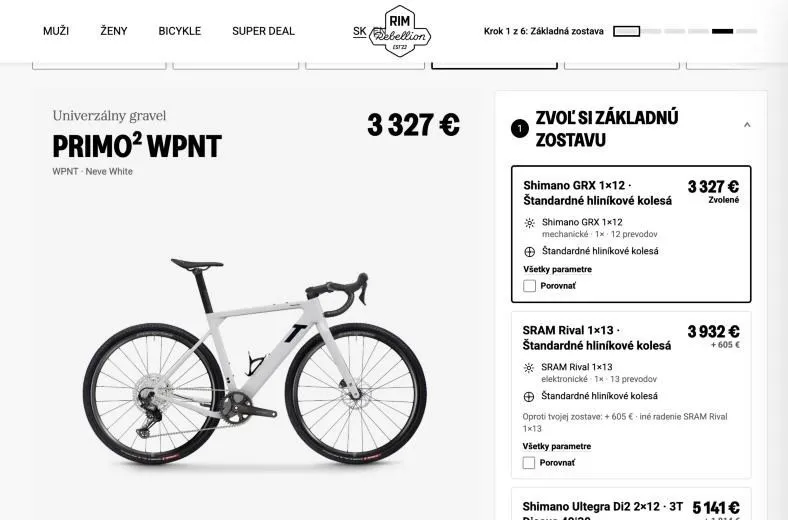
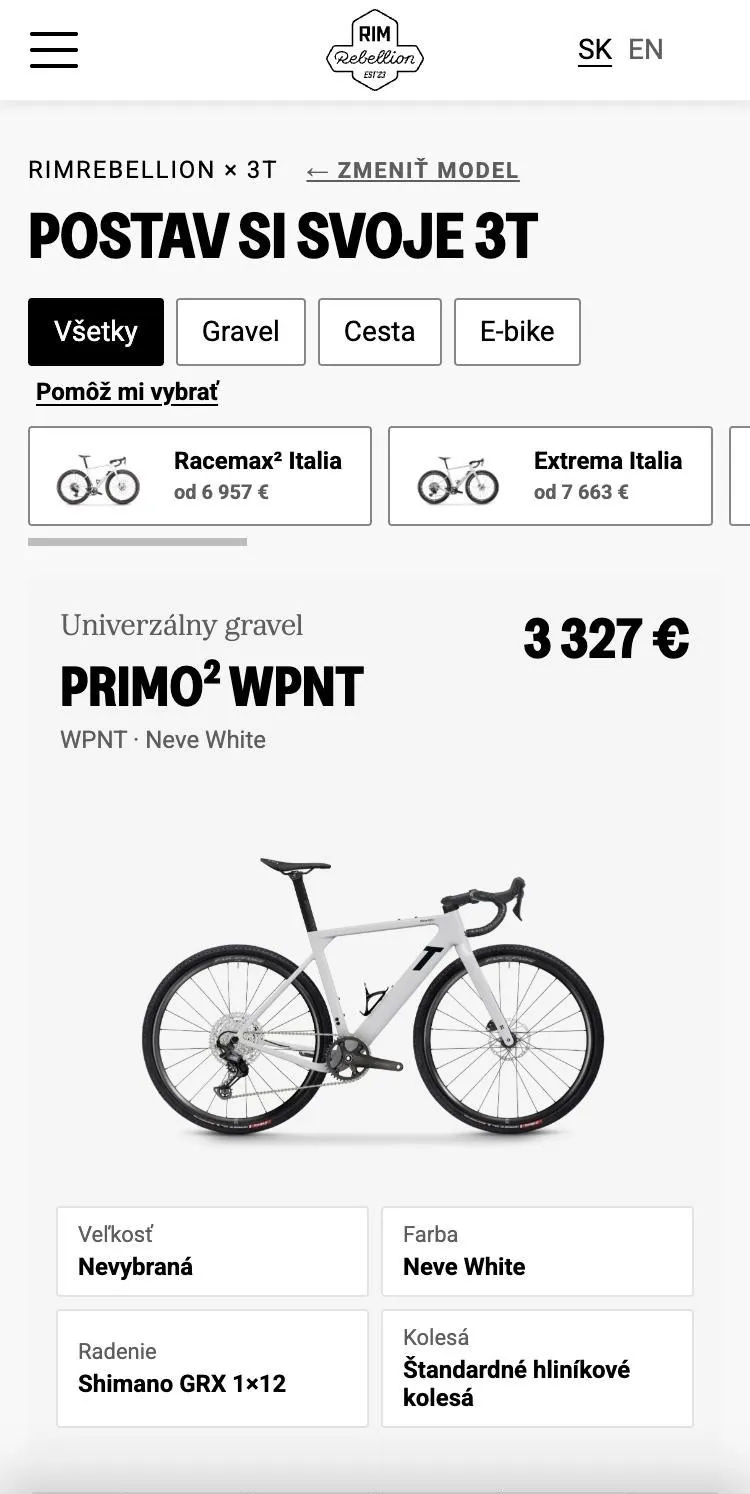
You can build a premium bike in a few minutes, even if you don’t know your size. From catalog items, you can easily pick your dream bike build.
A premium bike isn’t sold through a cart
3T bikes are made up of a model, size, color, drivetrain and wheels. Not every combination works together, and the data lives only in the price list and production documentation. In the online store, customers had no way of finding out what they could order and for how much.
With a high-end product, the customer needs confidence, not a quick Buy button. So I didn’t build the buying process as a classic online store, but as a consultation tool. The configurator collects requirements and qualifies the lead before the personal sale itself.
I don’t burden the customer with technical jargon. I ask about their riding style and preferences, and the system handles the complex parameters in the background.
The app’s logic doesn’t let you click together incompatible components. That prevents frustration and cancelled orders.
The price is recalculated in real time after every click, including VAT and with no hidden fees at the end of the process.
The price list is imported automatically once a month. We show only what can actually be built, so we don’t create false expectations.
From brief to final solution in a few days
- 01A fast prototype with AI
Instead of weeks of coding, I built the first interactive concept with Claude as a single HTML file and iterated on it right in the conversation.
- 02Data and rules
Analysis of the 3T B2B price list and compatibility rules derived from real complete builds.
- 03Iterating the logic
We fine-tuned the flow together with the client, for example the automatic frame size suggestion based on the rider’s height.
- 04Going live
A stable production version in a GitHub repository with automated deployment. Enquiries from the configurator go straight to the retailer.
Six decisions that simplified the choice
- 01Two paths instead of one
ProblemThe customer doesn’t know the 3T catalog and doesn’t know where to start.
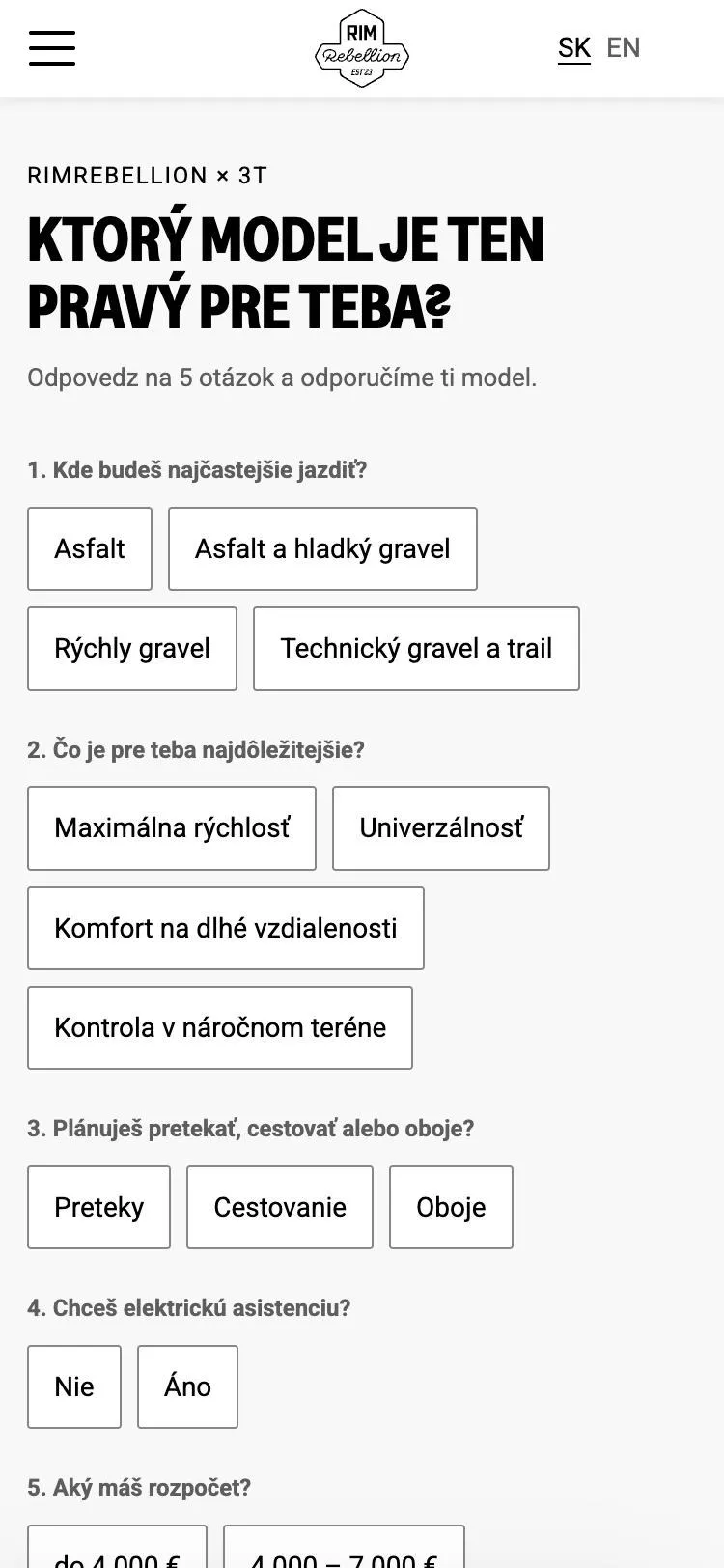
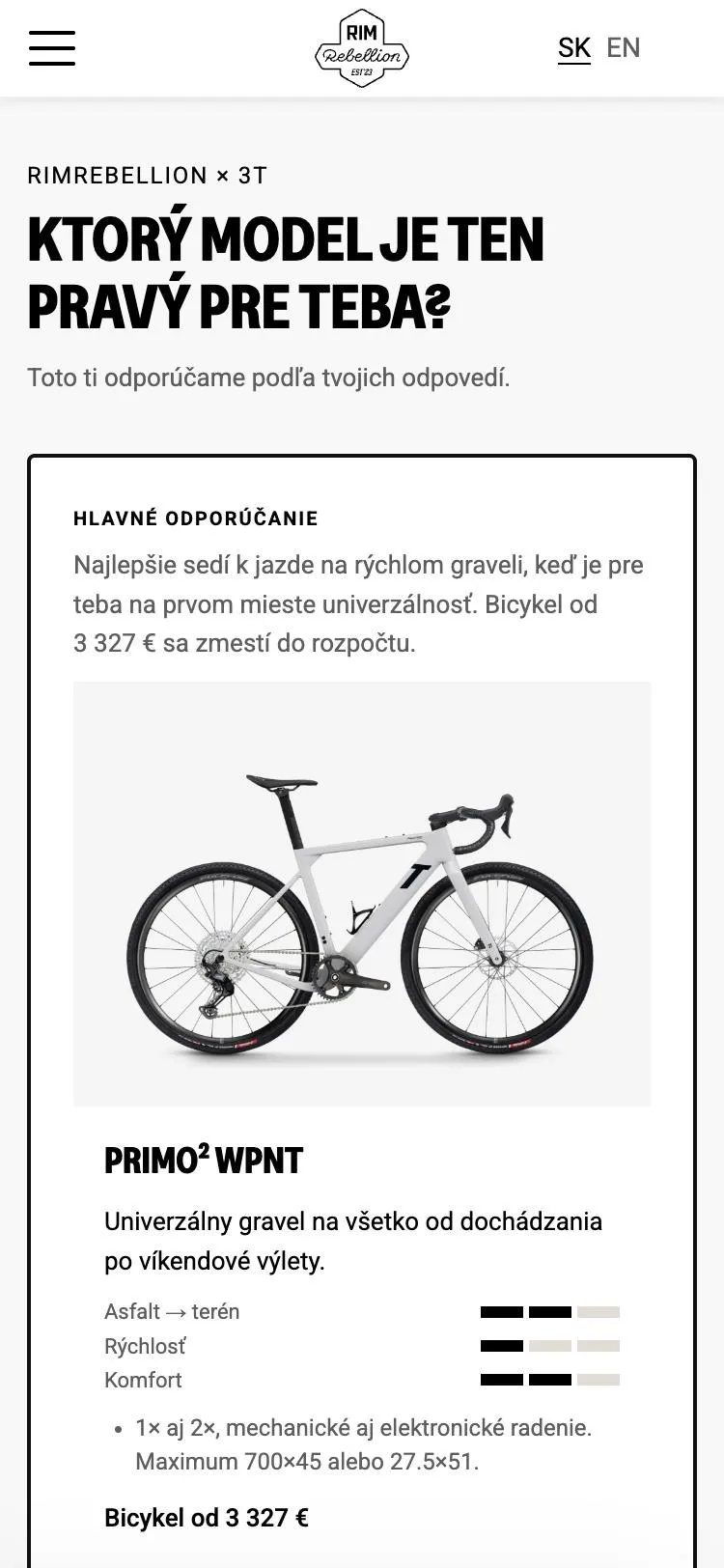
SolutionThe “Help me choose” quiz with 5 questions (terrain, priority, racing or travel, e-bike, budget) recommends a model and an alternative. Those who know their model go straight to the selection.
- 02Compatibility in the background
ProblemNot every combination of parts can be built into a final bike.
SolutionThe rules are derived from real complete builds, not from a handwritten list. The customer sees only valid options and no technical warnings.
- 03Height instead of size
ProblemMany people don’t know their frame size.
SolutionThe customer enters their height and the configurator suggests a size based on the geometry.
- 04The customer’s language, not the catalog’s
ProblemCatalog names are technical jargon.
Solution“Drivetrain” becomes “Shifting system”, “Choose a complete build” becomes “Pick your starter package”.
- 05Lead qualification instead of a cart
ProblemA premium bike isn’t bought with one click.
Solution“VIP care”: at the end, just a name, email and phone, with no message field. The sale is completed in person during the bike fit.
- 06Saving and sharing
ProblemChoosing a bike takes longer than one visit.
SolutionBuilds can be named, saved and shared with a link. Fully in SK and EN.

From a single HTML file to a repository
The result isn’t a one-off prototype, but a sustainable and scalable solution: plain HTML, CSS and JavaScript, a GitHub repository and automated deployment through GitHub. That makes further changes safe and fast.
A single HTML file, iterated in conversation.
AI proposed the compatibility rules and helped with the copy.
We checked every major change against a list: syntax, element references, closed tags.
A repository with automated deployment and a monthly price list import.
The configurator is live
It runs on 3t.rimrebellion.com in Slovak and English. It takes prices and variants from the current price list and sends enquiries straight to the retailer.